
Child Health CompanionLaunchedChild Health Companion
A multi-role, multi-platform system for child health management in childcare institutions. Family, teacher and health-practitioner, and doctor mini-programs plus a PC management system connect families, institutions, medical services, and administrators across health records, leave and attendance, child profiles, consultations, meal planning, nutrition, and procurement.
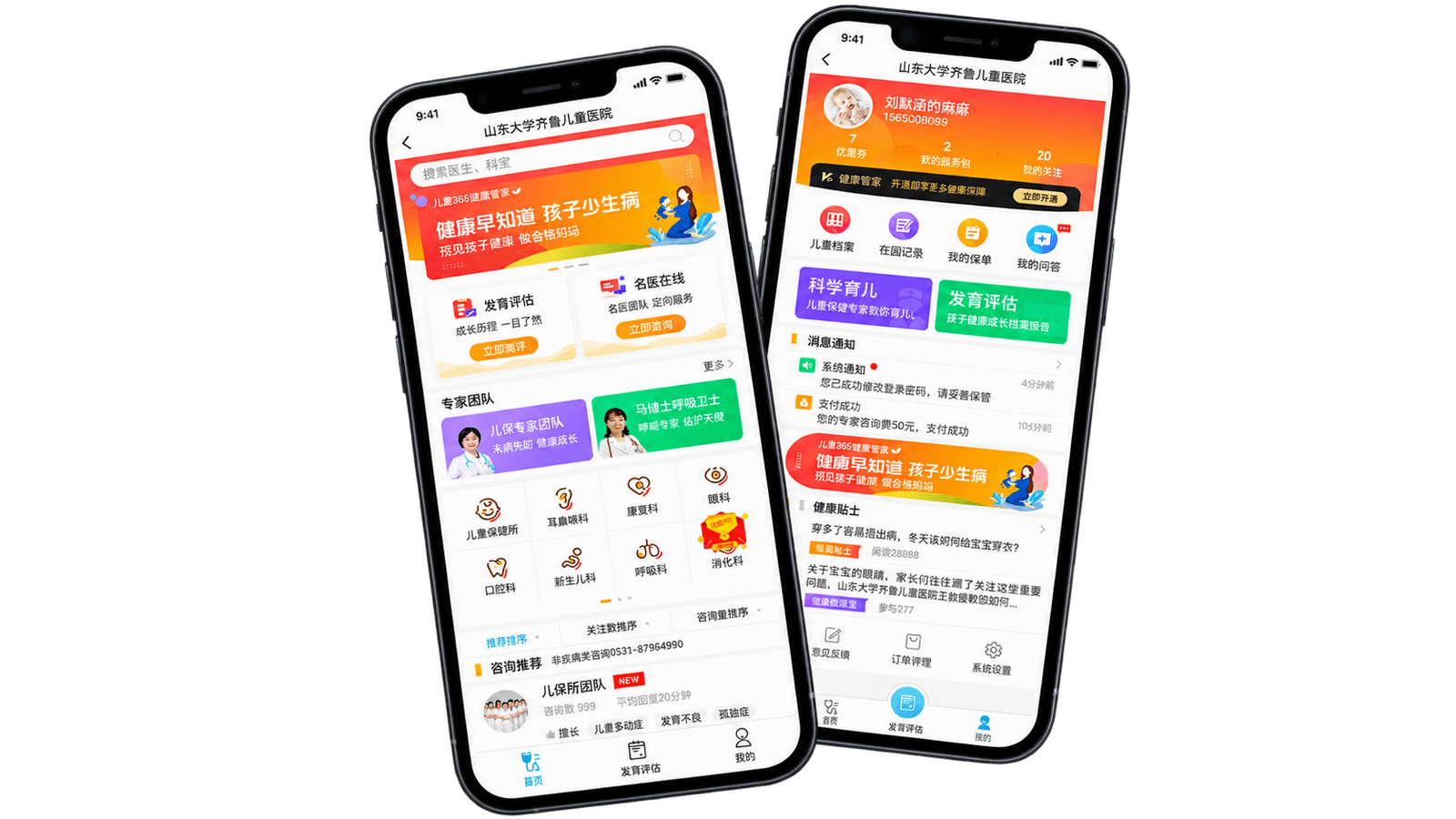
- My role
- Lead UI/UX DesignerEarly requirements and product definitionInteraction and multi-platform UI design
- Period
- Core product: 2018.10–2019.06PC management expansion: 2020
- Delivered
- Multi-role, multi-platform system launchedFood-safety dashboard design completedChild Health Hut pilot delivered
- Core capabilities
- Multi-role business modellingDigitising paper-based health workflowsCross-platform mini-program and PC experience design
Platform Ecosystem
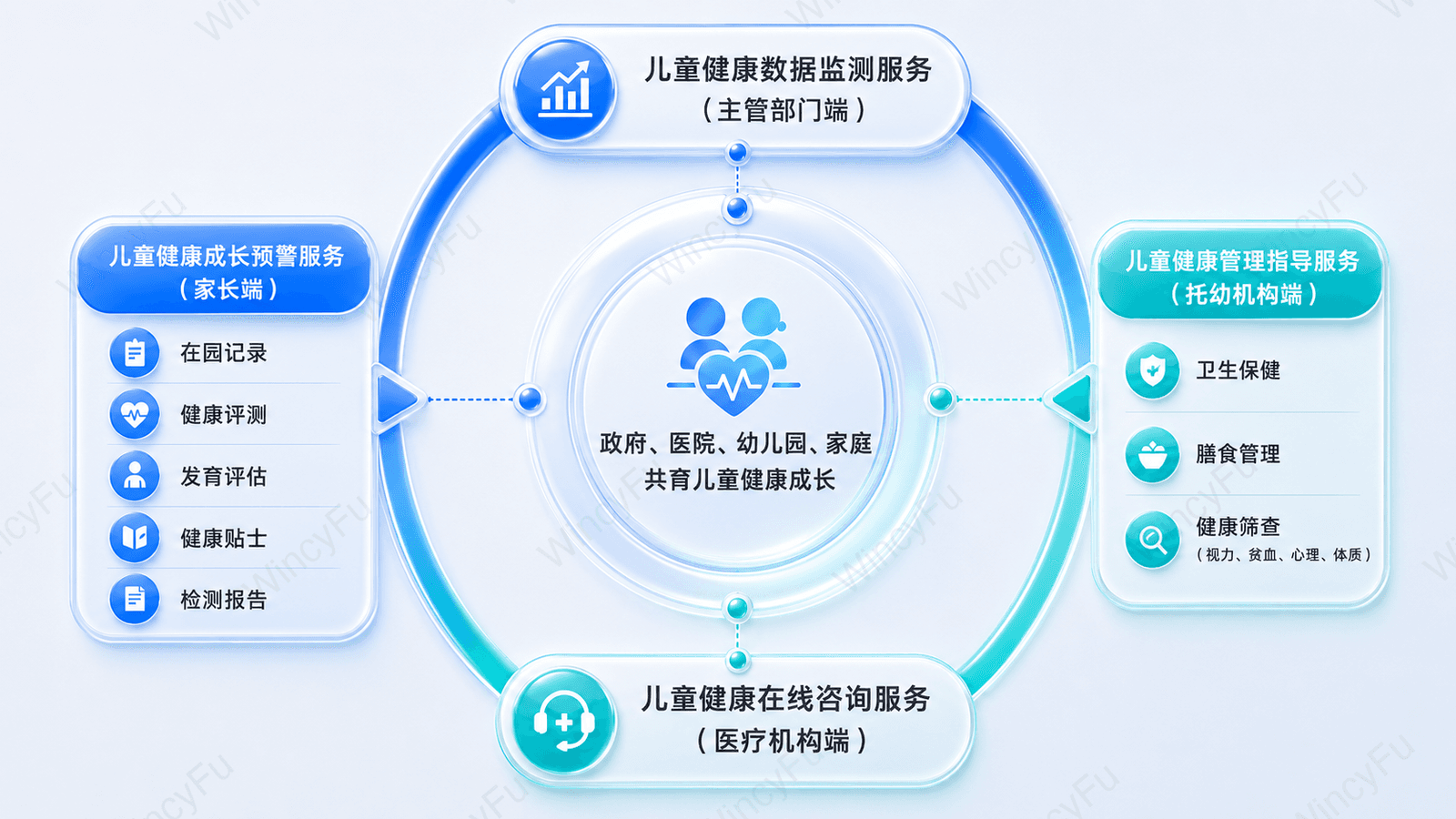
One system connecting multiple roles in child-health management.
With the child as the core object, the system brings families, childcare institutions, medical services, and relevant administrators into one product system, reorganising information, workflows, and endpoints around each role's tasks.
Different roles do not use the same feature set; they complete different tasks around the same child.
Problem & Context
Building a digital system from offline work.
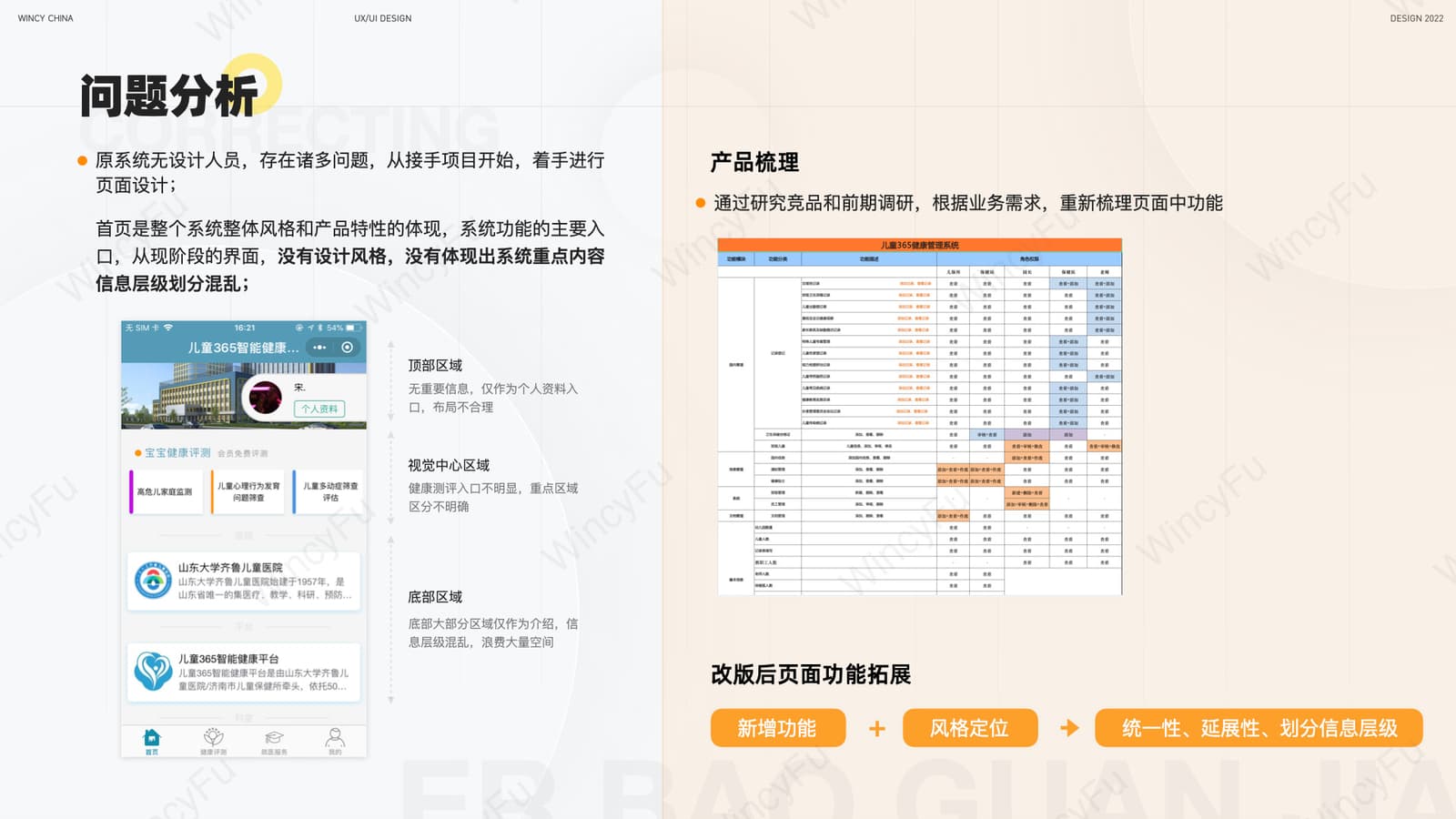
At project start, there was no mature system to optimise. The team faced childcare health work embedded in paper forms, manual notices, and offline collaboration. Design first had to understand the real work, then decide what to digitise, which roles to involve, and which endpoint should carry each task.
纸质记录缺少统一管理
记录对象、填写角色、填写周期以及查看和留档关系缺少统一梳理,长期依赖纸质表格维持。
多角色协作缺少清晰流转
不同角色关注的信息和承担的任务并不相同,原有协作方式缺少清晰的信息流转关系。
多端任务缺少合理分工
现场记录与长表格、膳食、营养计算和报表等复杂任务混杂,移动端与 PC 的业务边界不清晰。
原系统缺少专业设计规范
原系统无设计人员,界面设计风格不统一、信息层级混乱,专业内容也缺少清晰易用的呈现方式。
01 / Parent
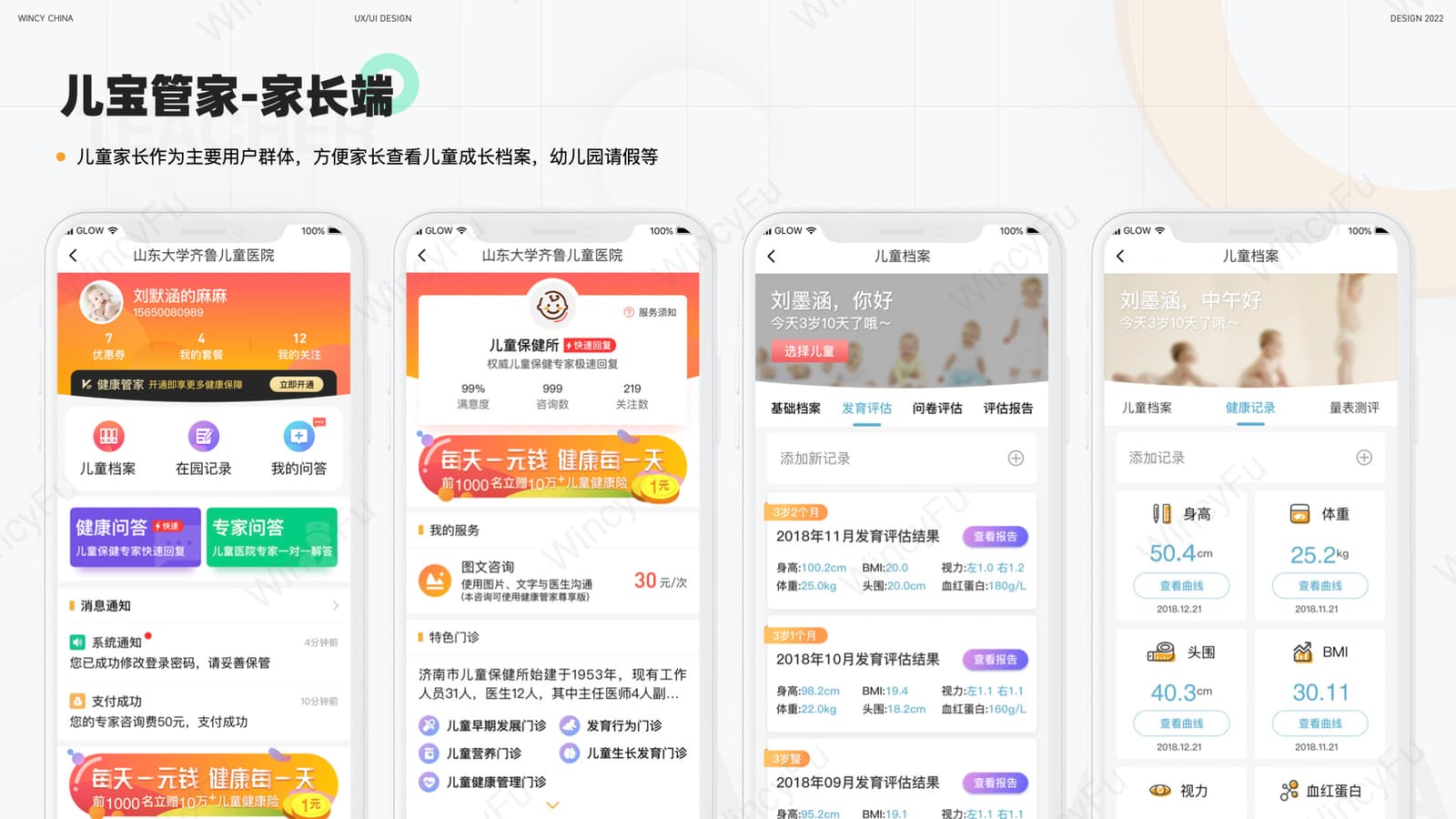
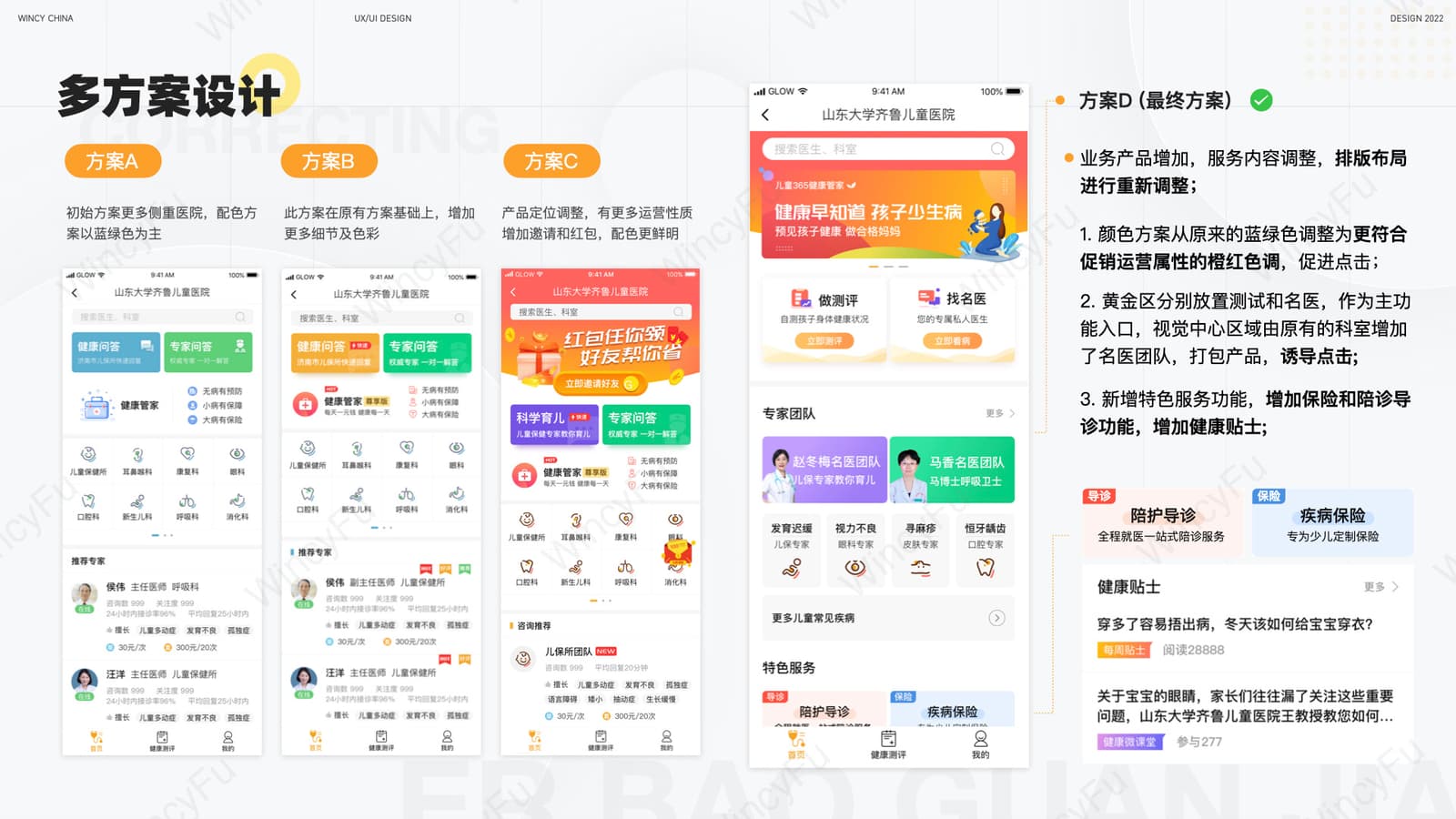
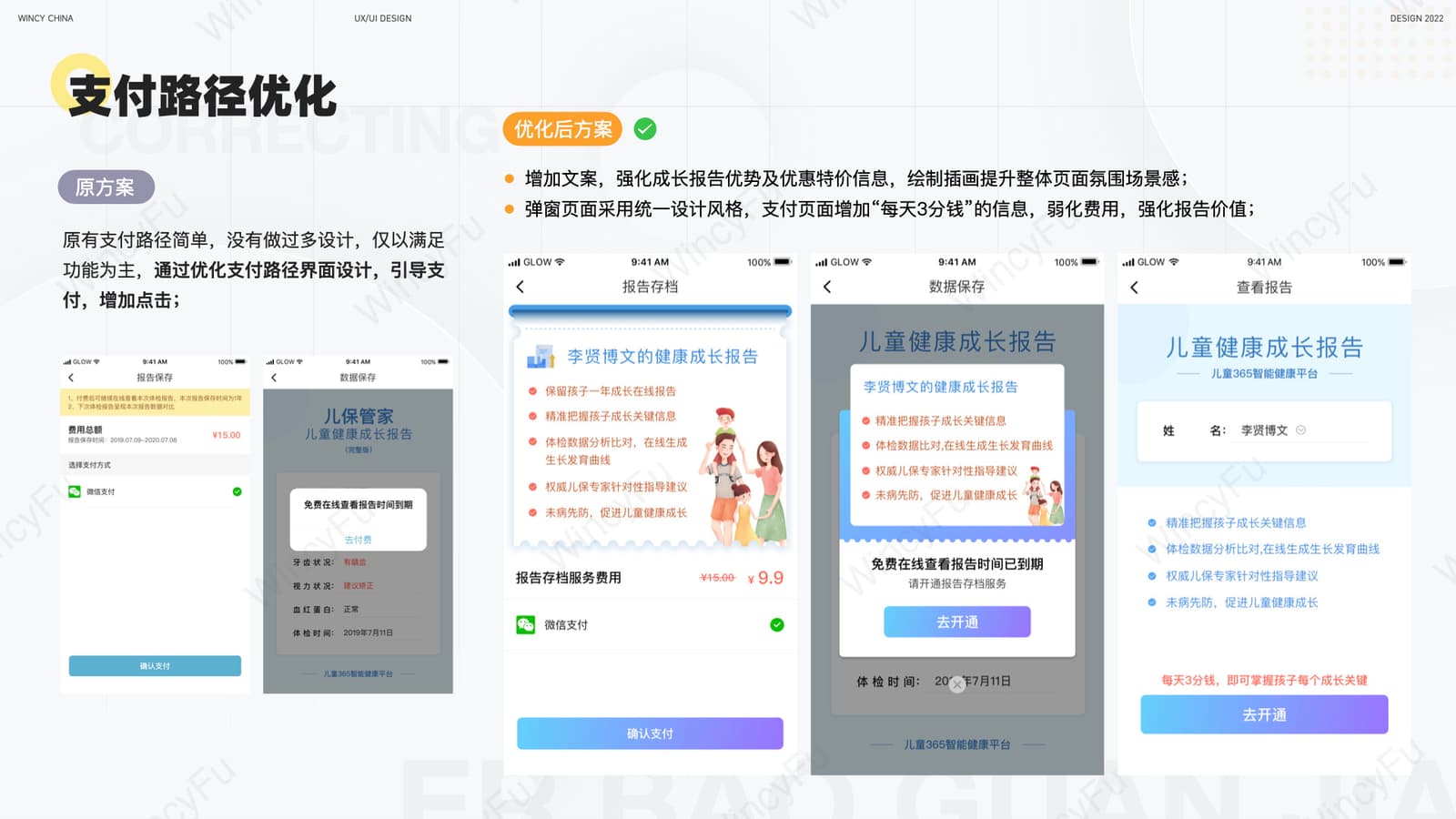
Family experience: turning institution records into relevant information.
Parents do not need to see every health record in the institution backend. The design reorganises information around the child, helping families understand their child's time at the institution, health status, growth and development, and related health services.
02 / Kindergarten
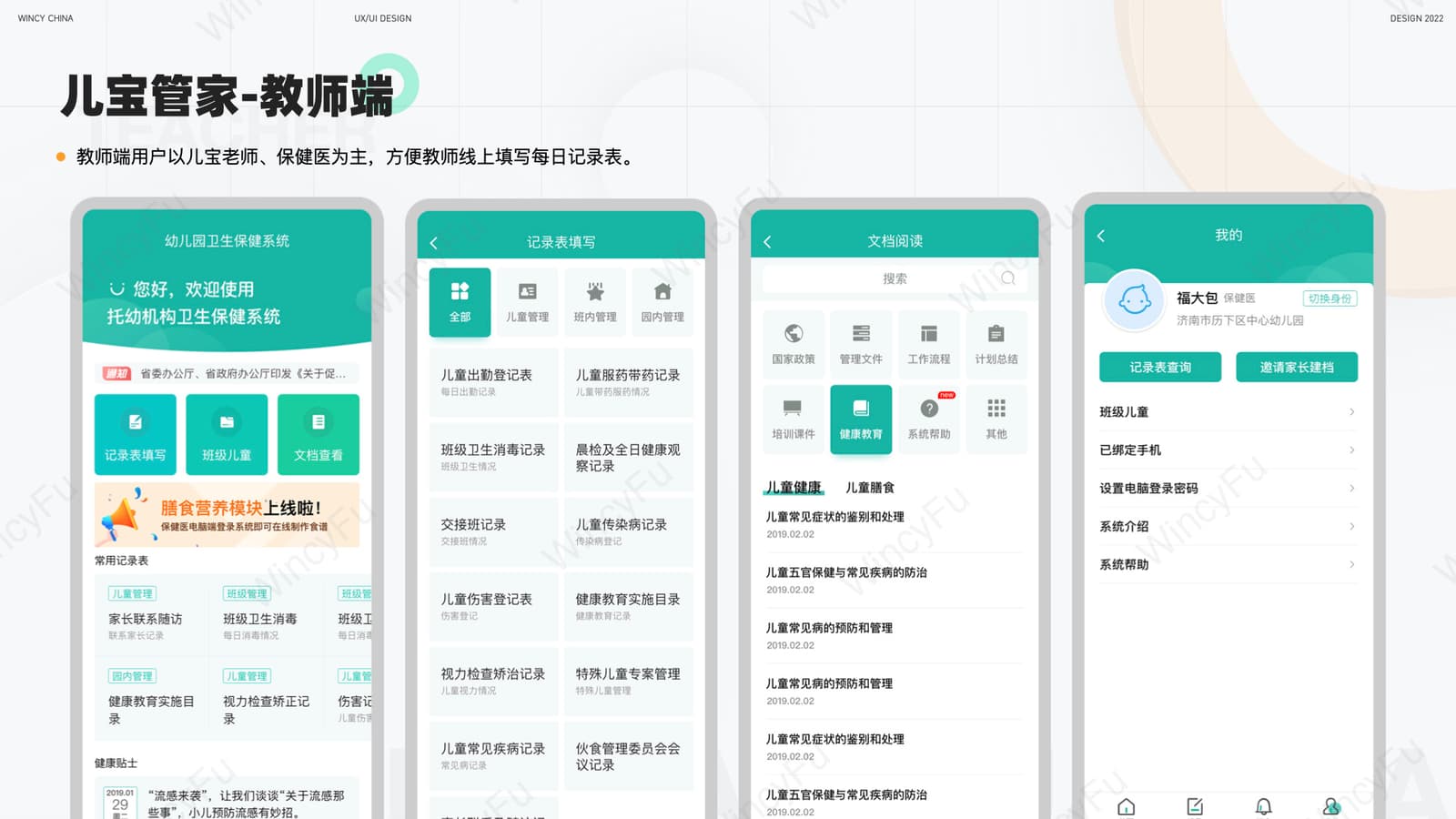
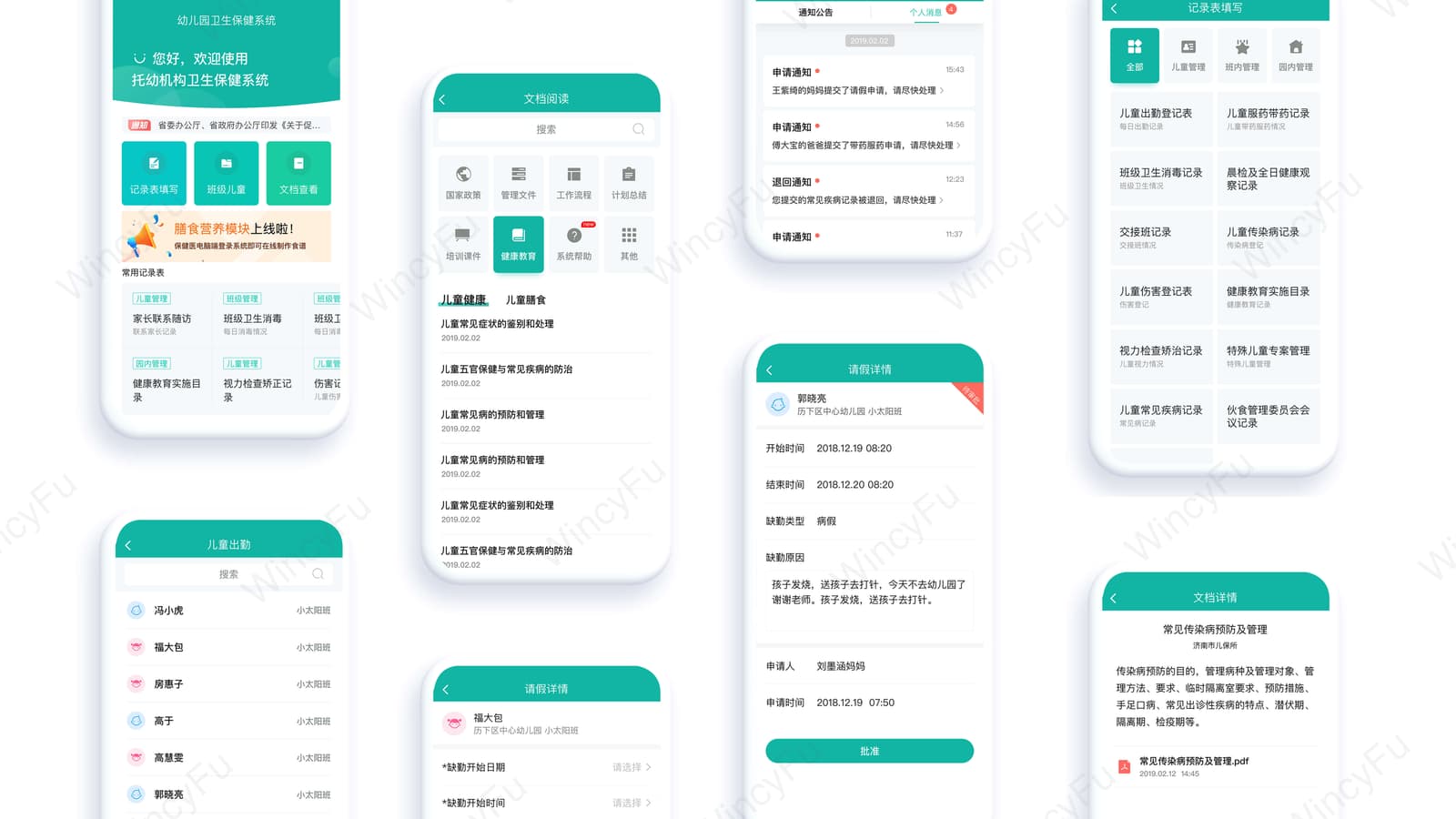
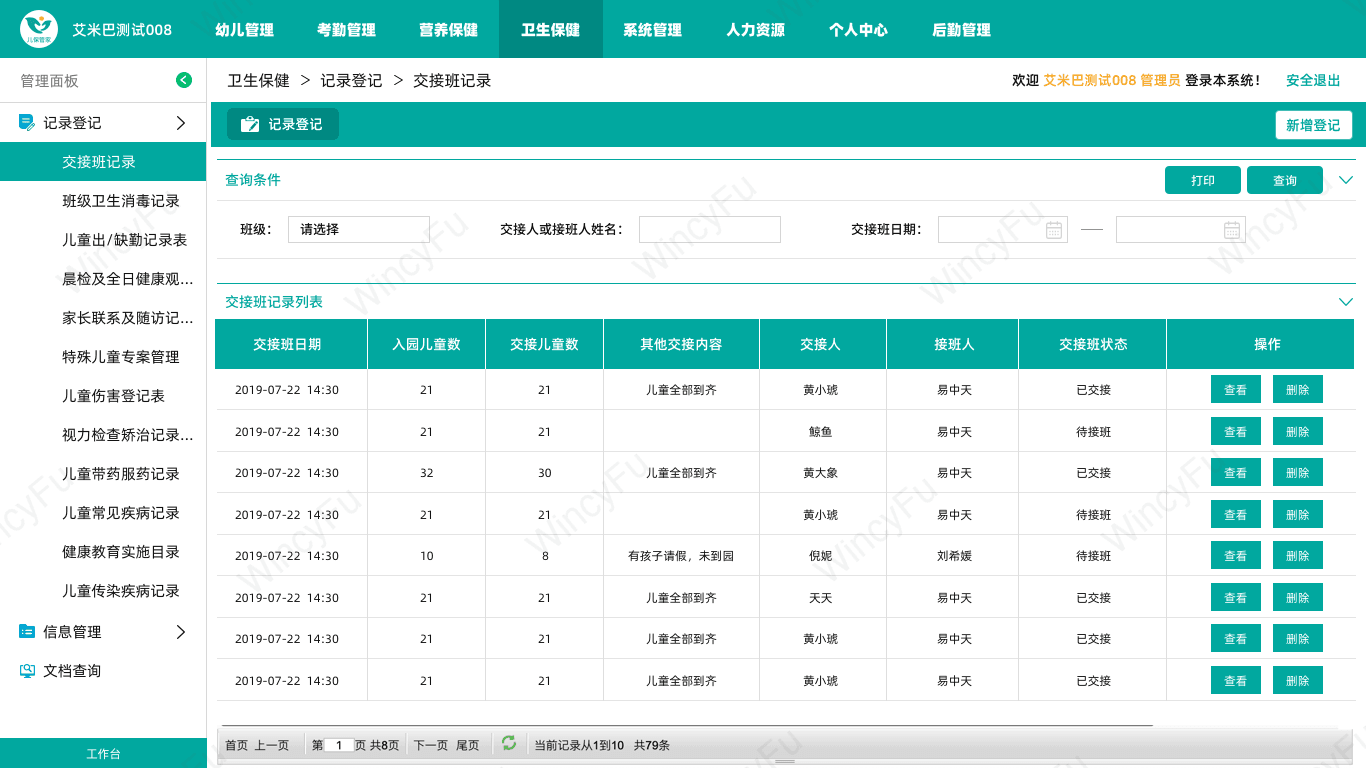
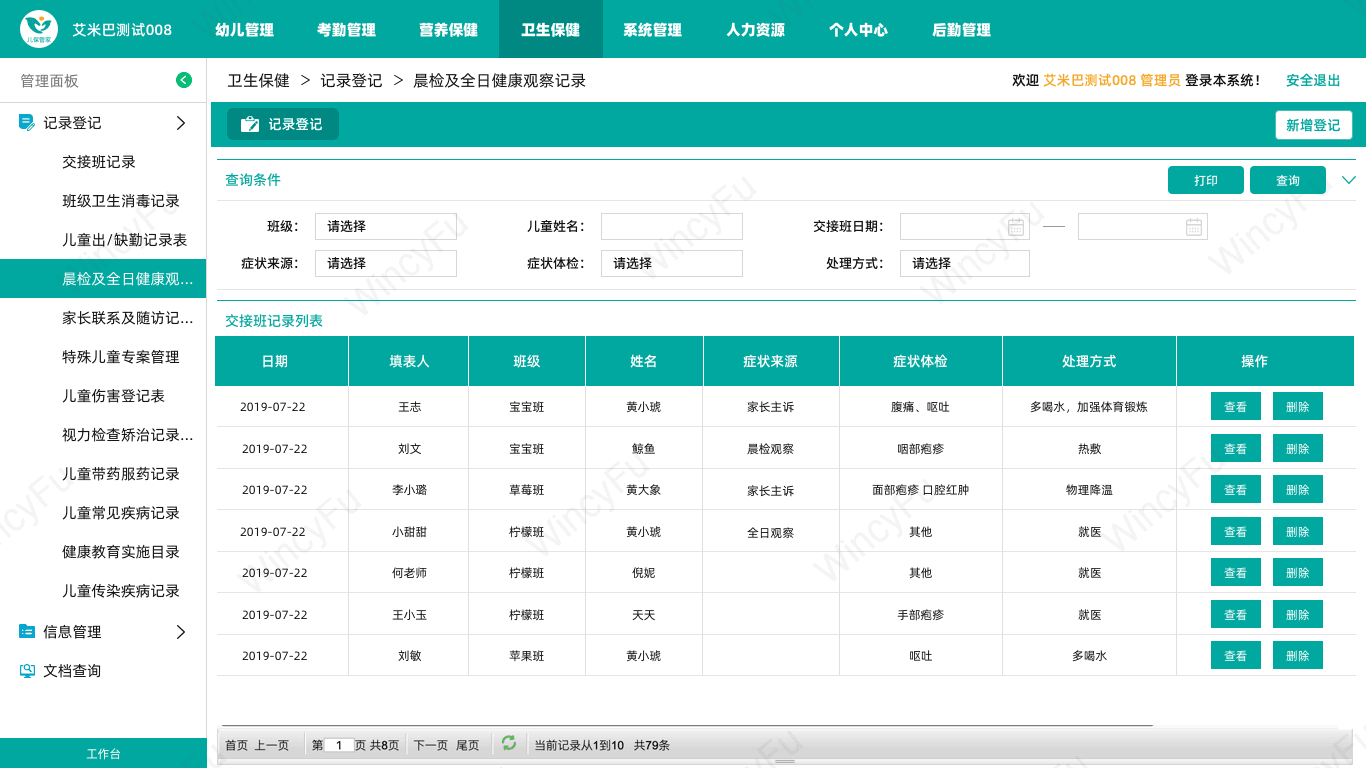
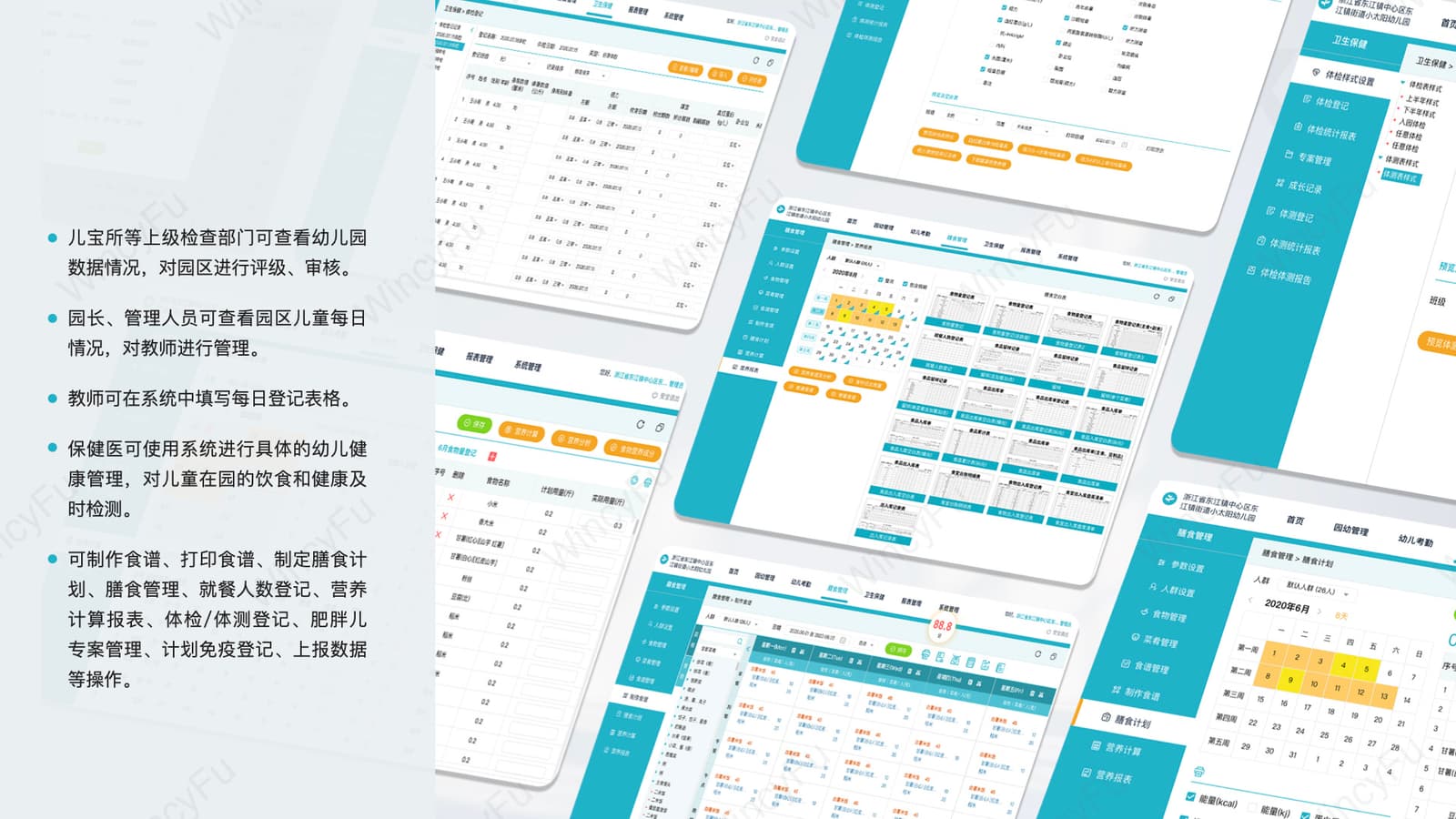
Institution experience: digitising paper health records.
A · Twelve digital health-record categories
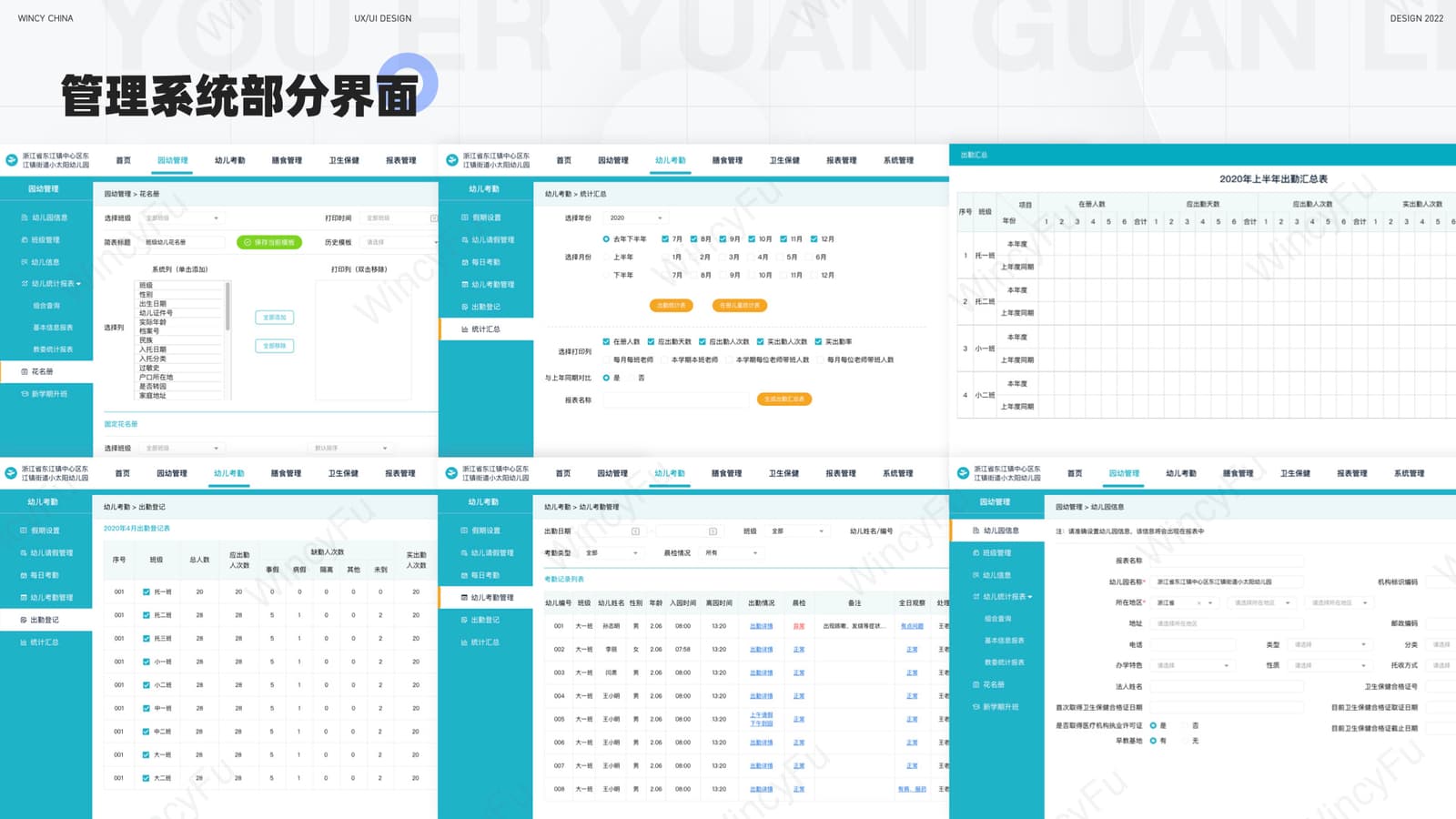
The twelve record categories were retained on paper for years and used in institutional review. The digital system supports monthly entry and review, organised around child, class, and institution contexts.
Before
- Twelve record categories depended on paper and long-term storage
- Leave, approval, and attendance required manual reconciliation
After
- Institutions enter monthly digital records for administrative review
- Leave requests, approval, and attendance connect across roles
B · Nutrition and procurement
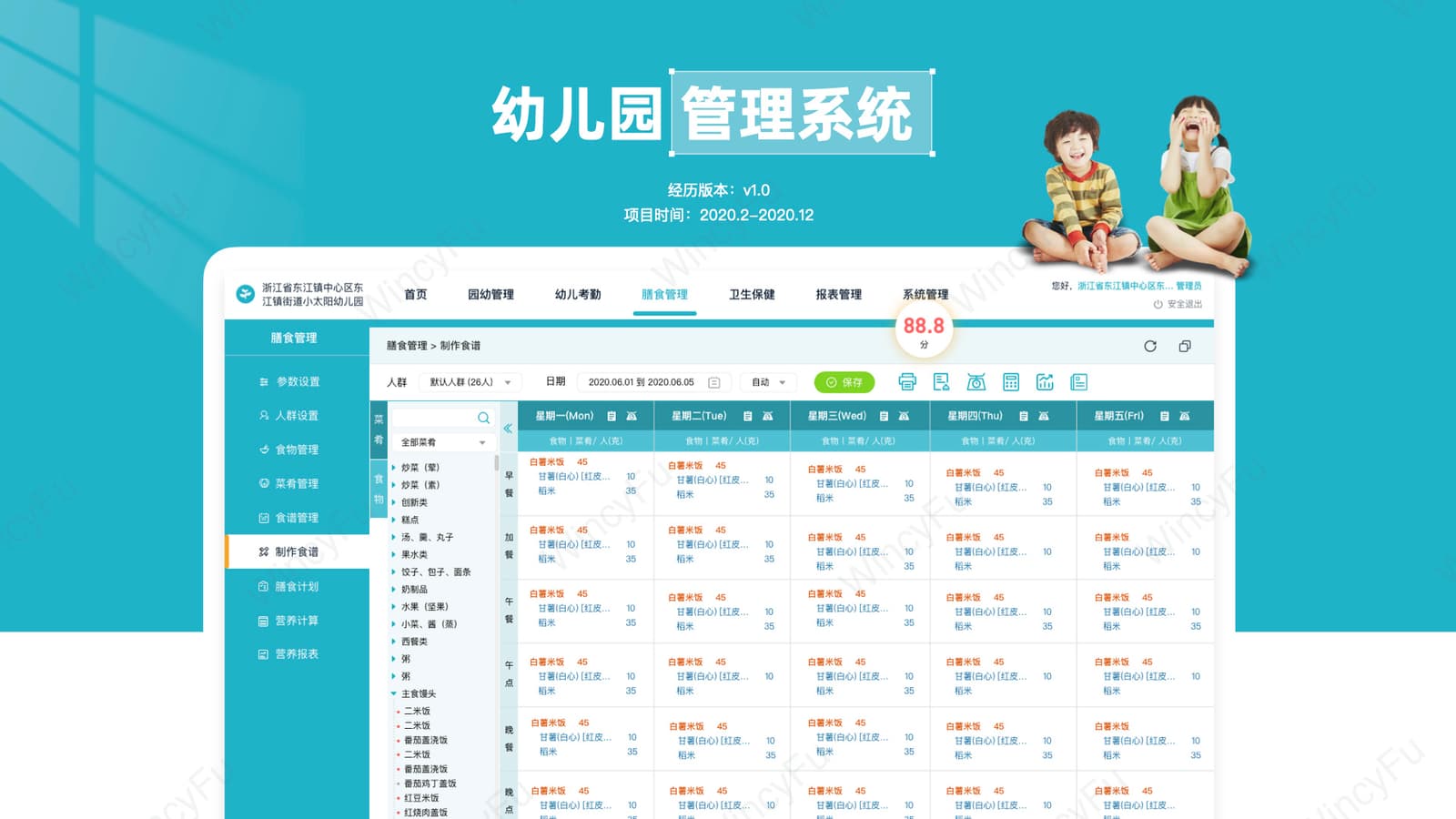
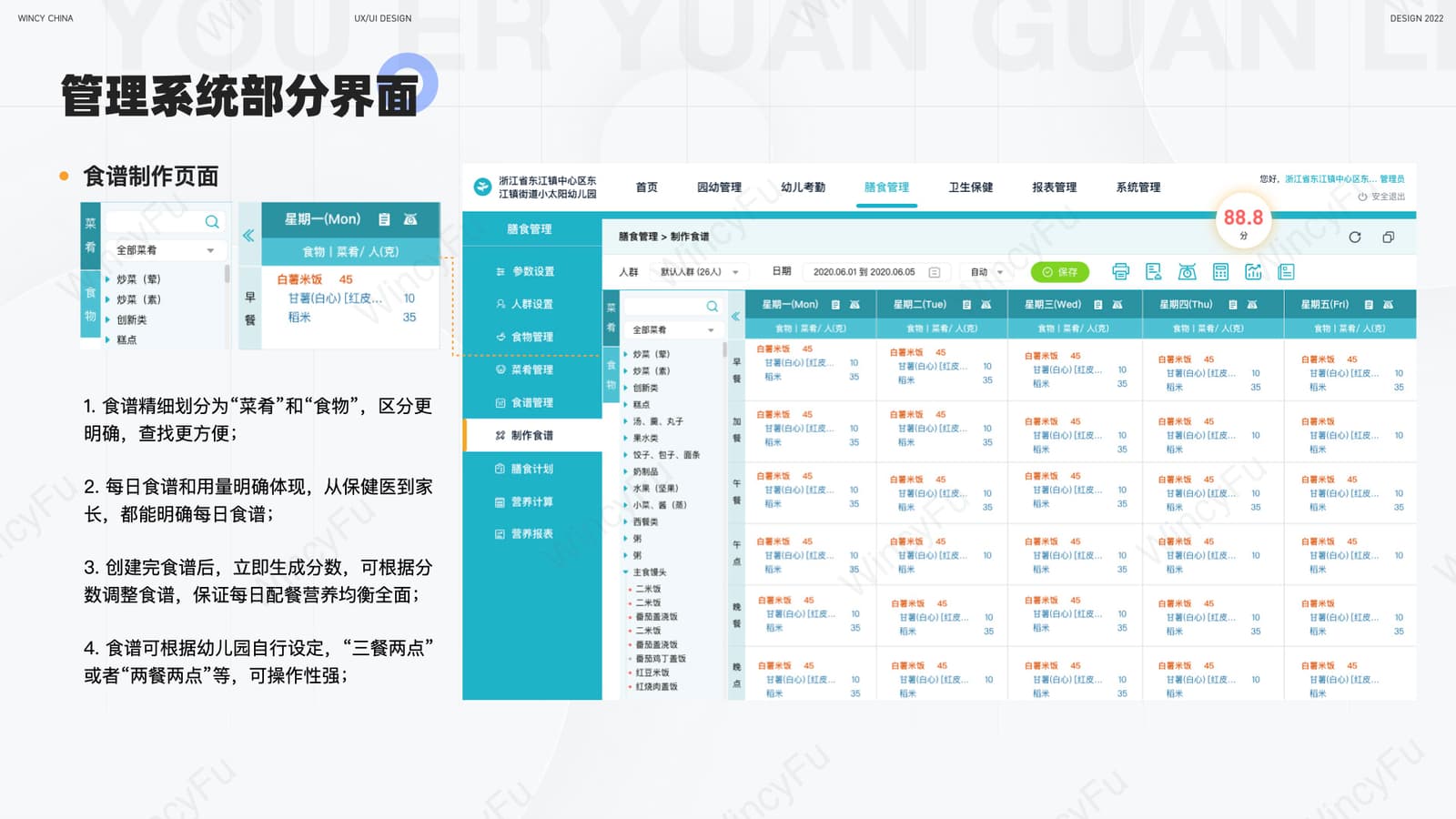
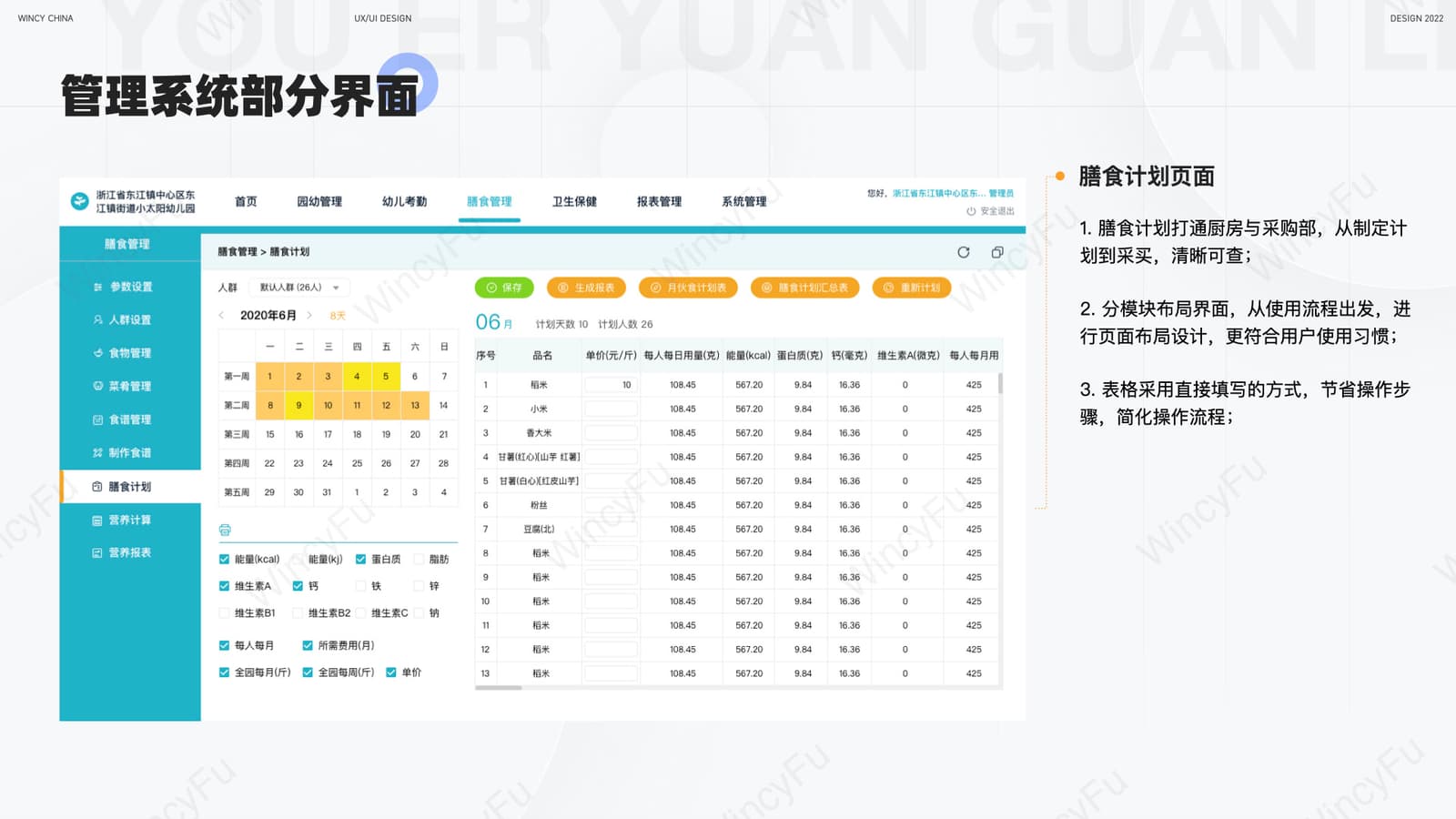
The nutrition system connects ingredients, dishes, weekly menus, nutrition calculation and scoring, menu adjustment, and reporting. Purchasing quantities can be estimated from menus and child counts.
03 / Management
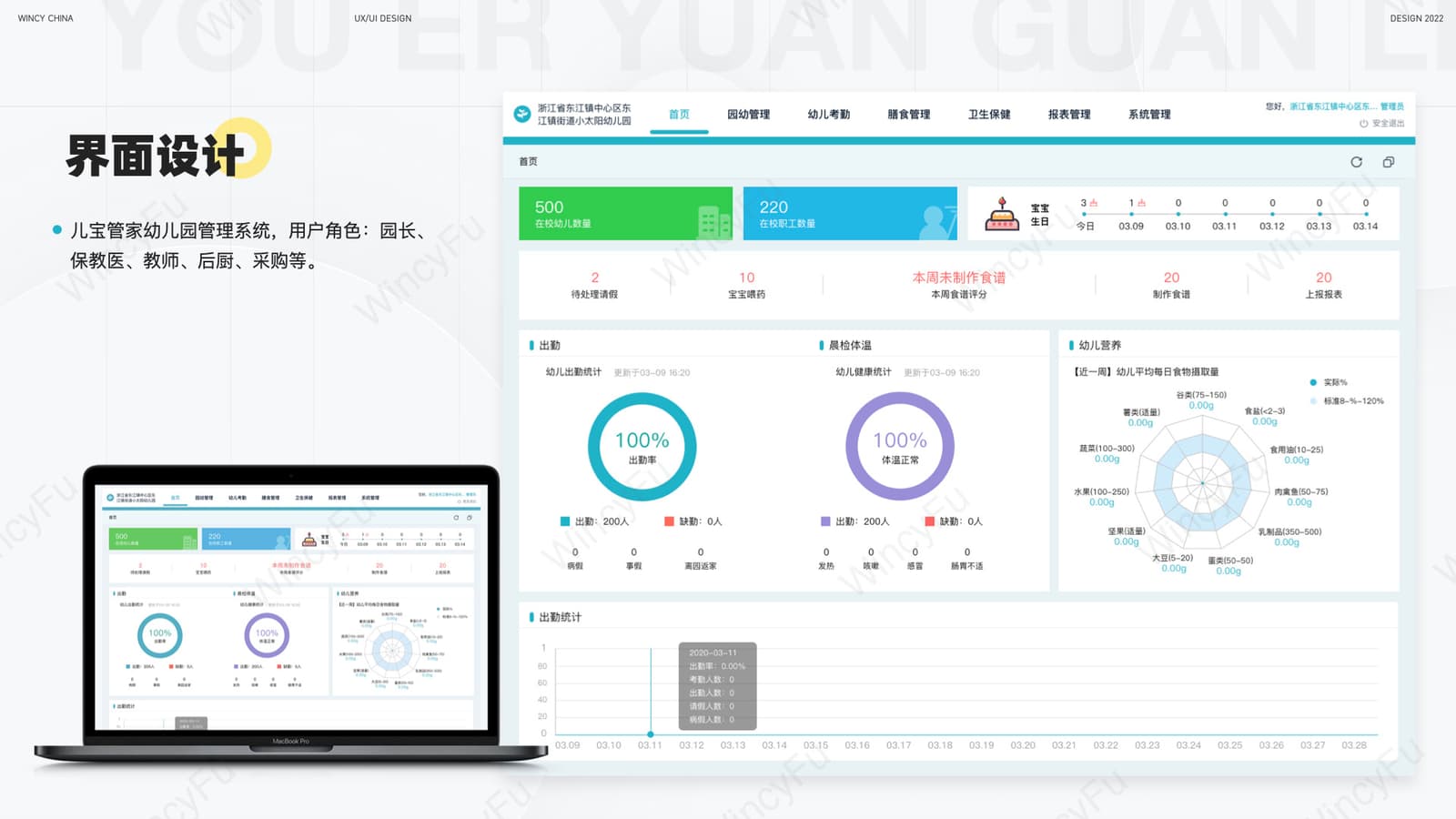
Management: reviewing institution records and business data.
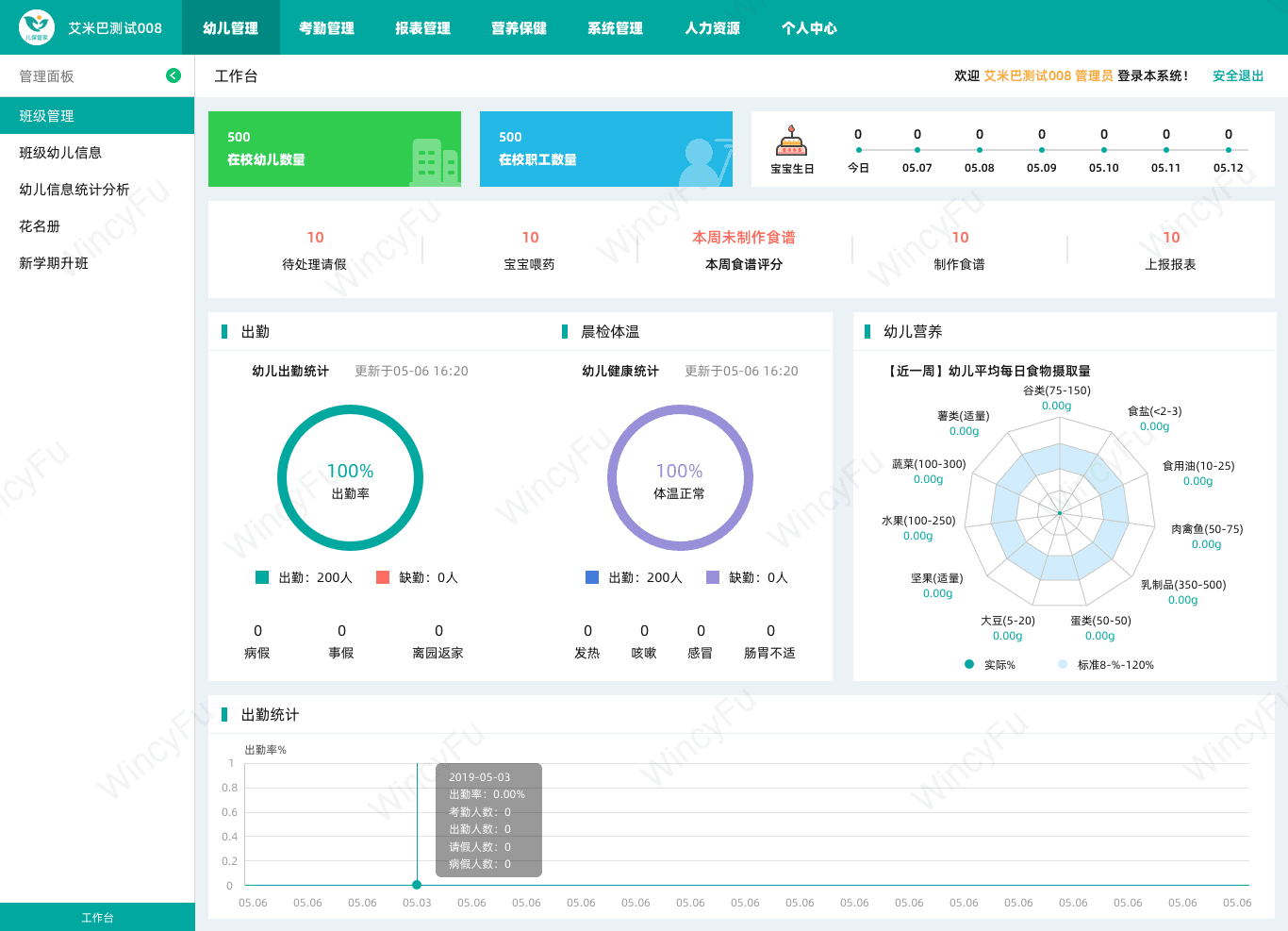
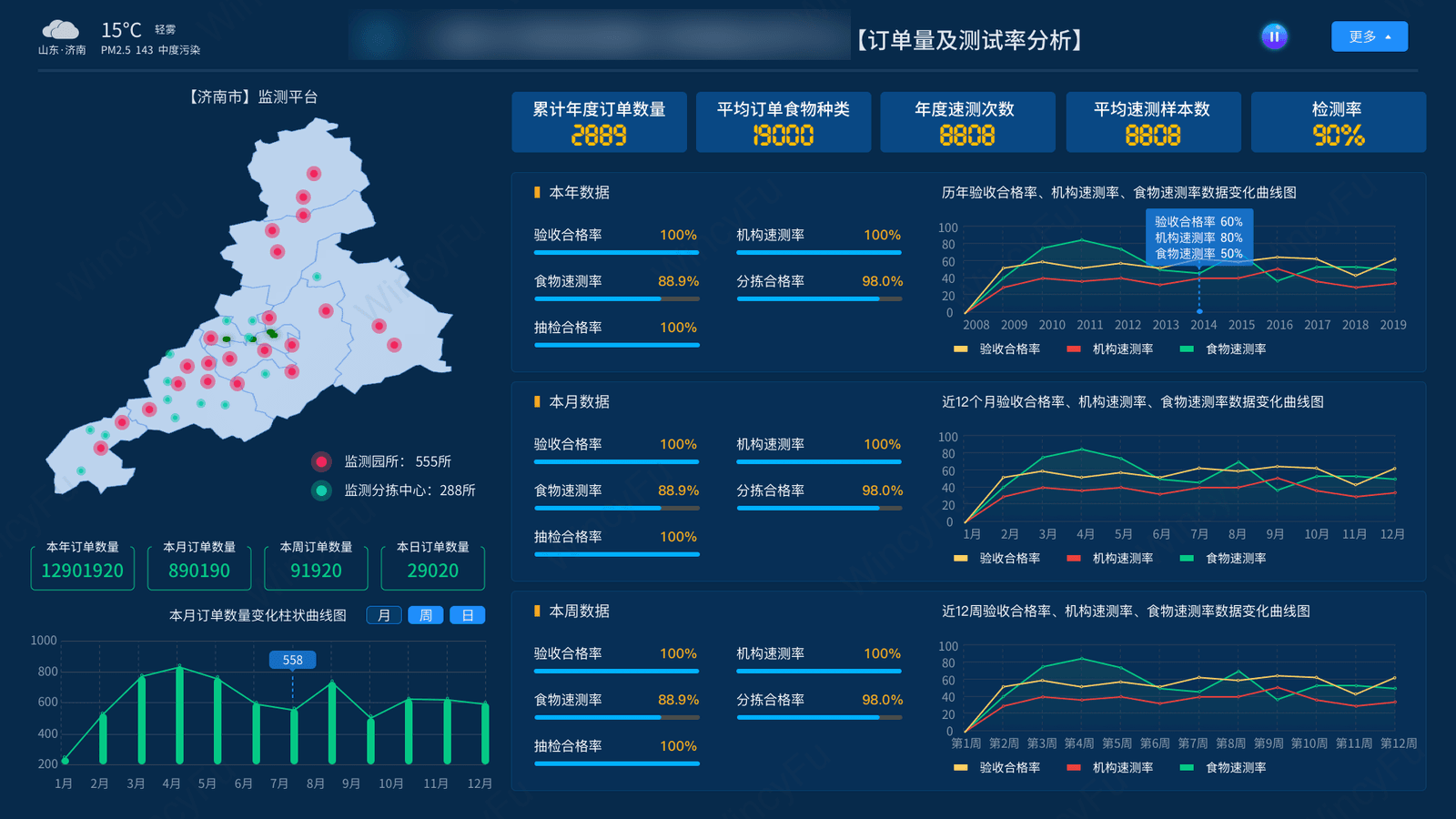
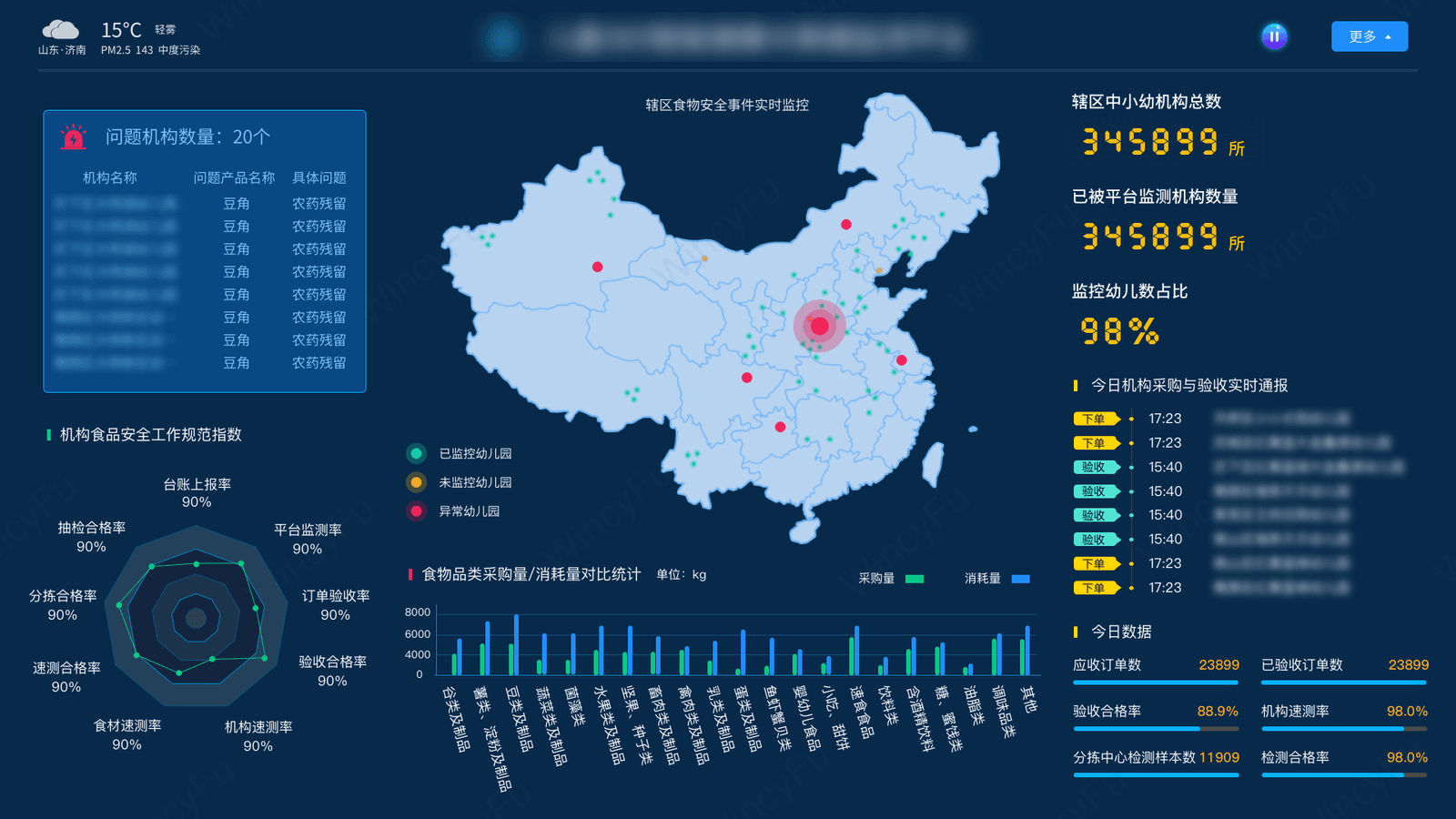
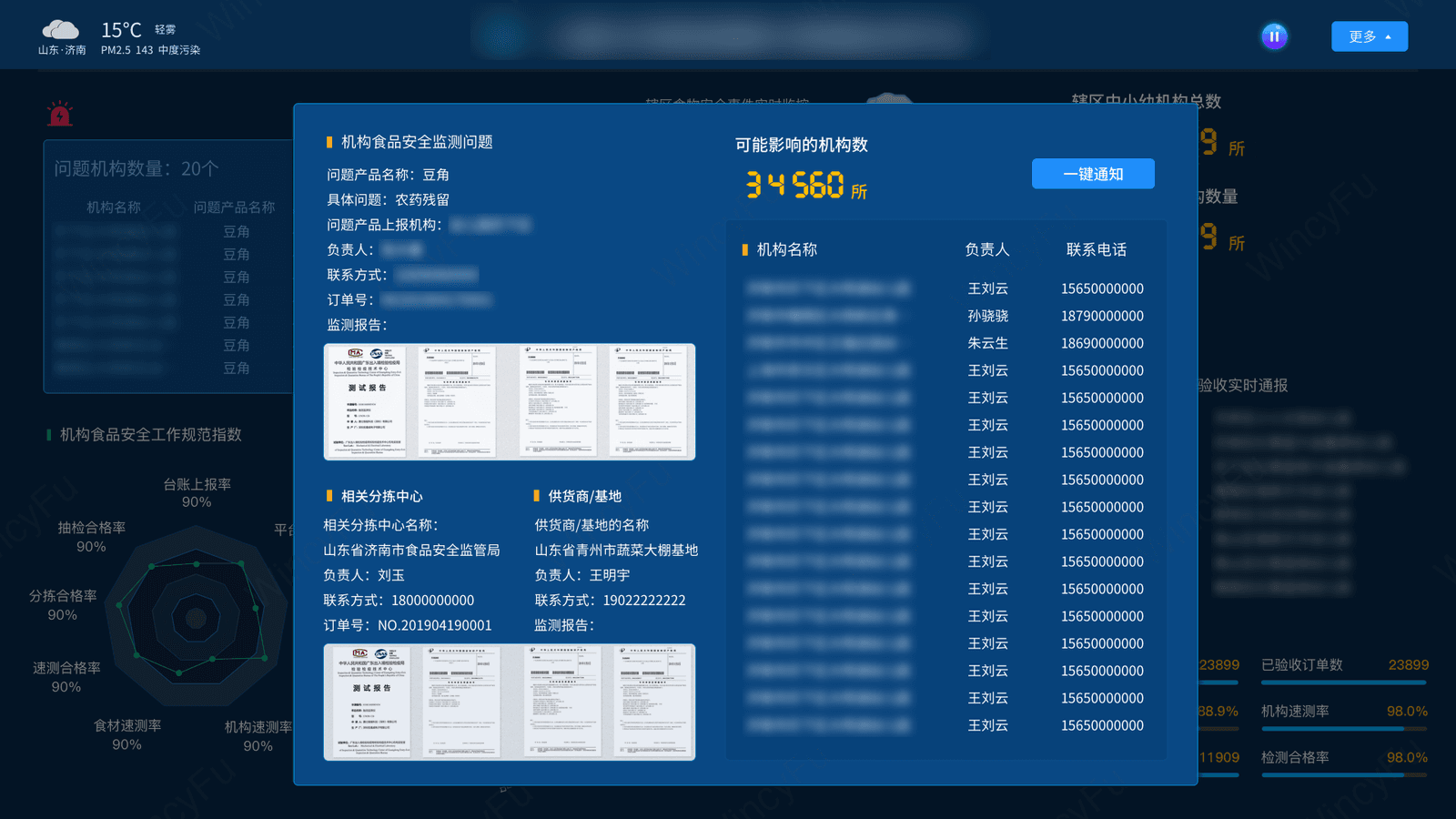
Administrators can review institutional health records and child-health data, while institutional staff use PC for dense tables, history, nutrition, reports, and management. Complete permission boundaries vary by version and are not fully documented.
04 / Medical
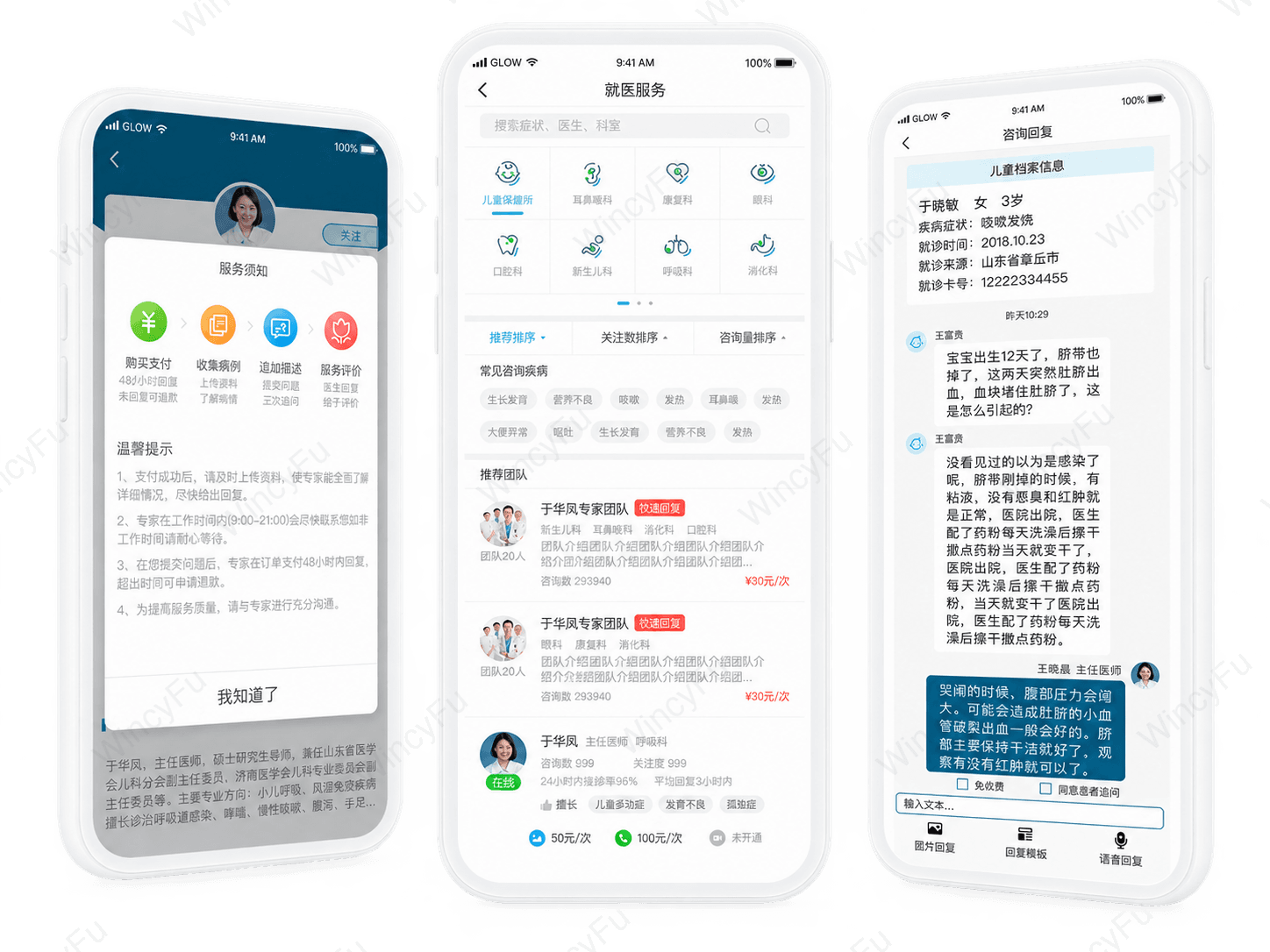
Doctor experience: providing consultation and health guidance.
The doctor mini-program launched for online consultation and child-health education. Early plans included additional capabilities, but this case only presents the consultation and guidance work that can be confirmed.
Doctors provide consultation and guidance; the medical side does not participate in leave and attendance workflows.
05 / Pilot
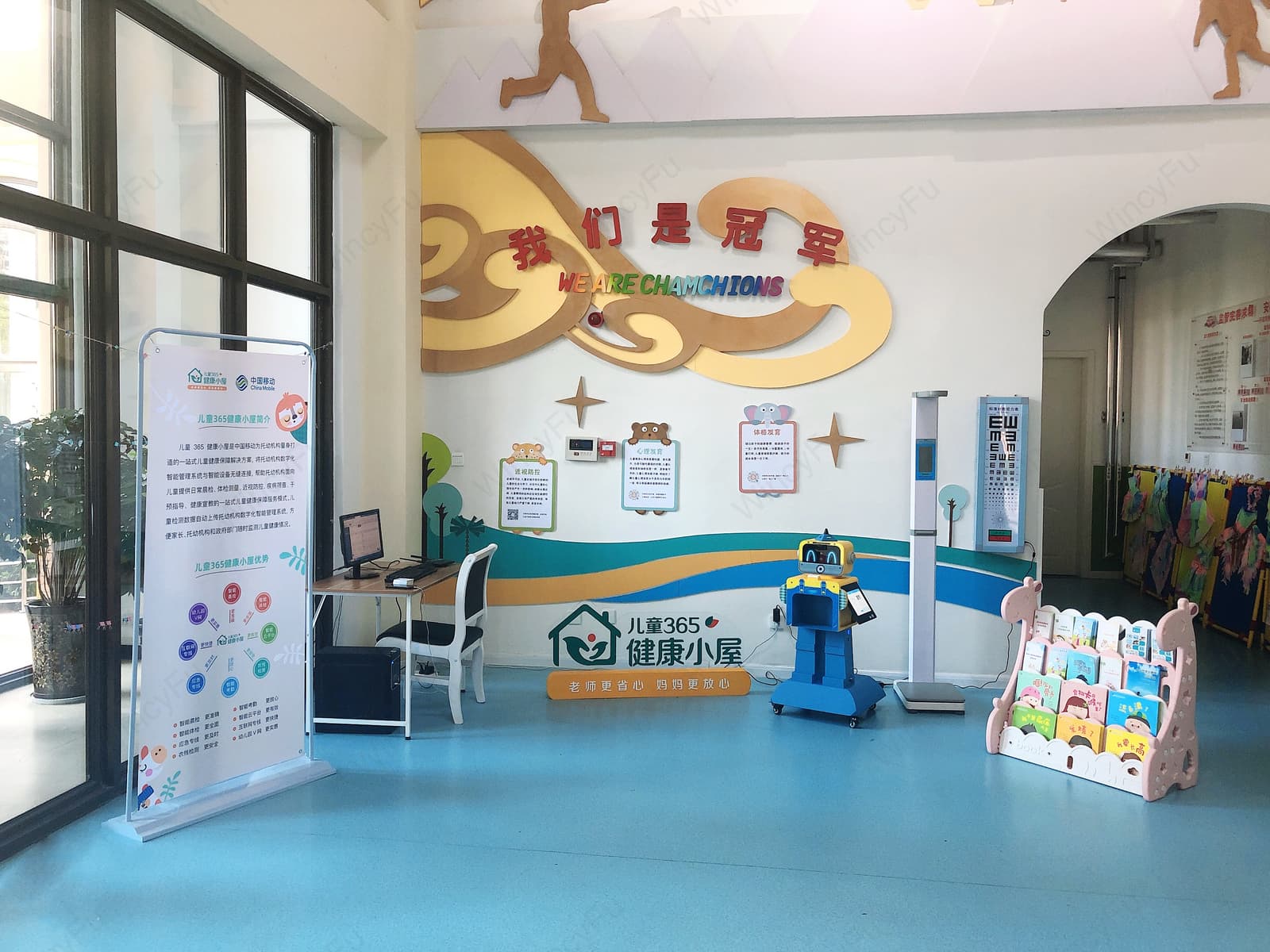
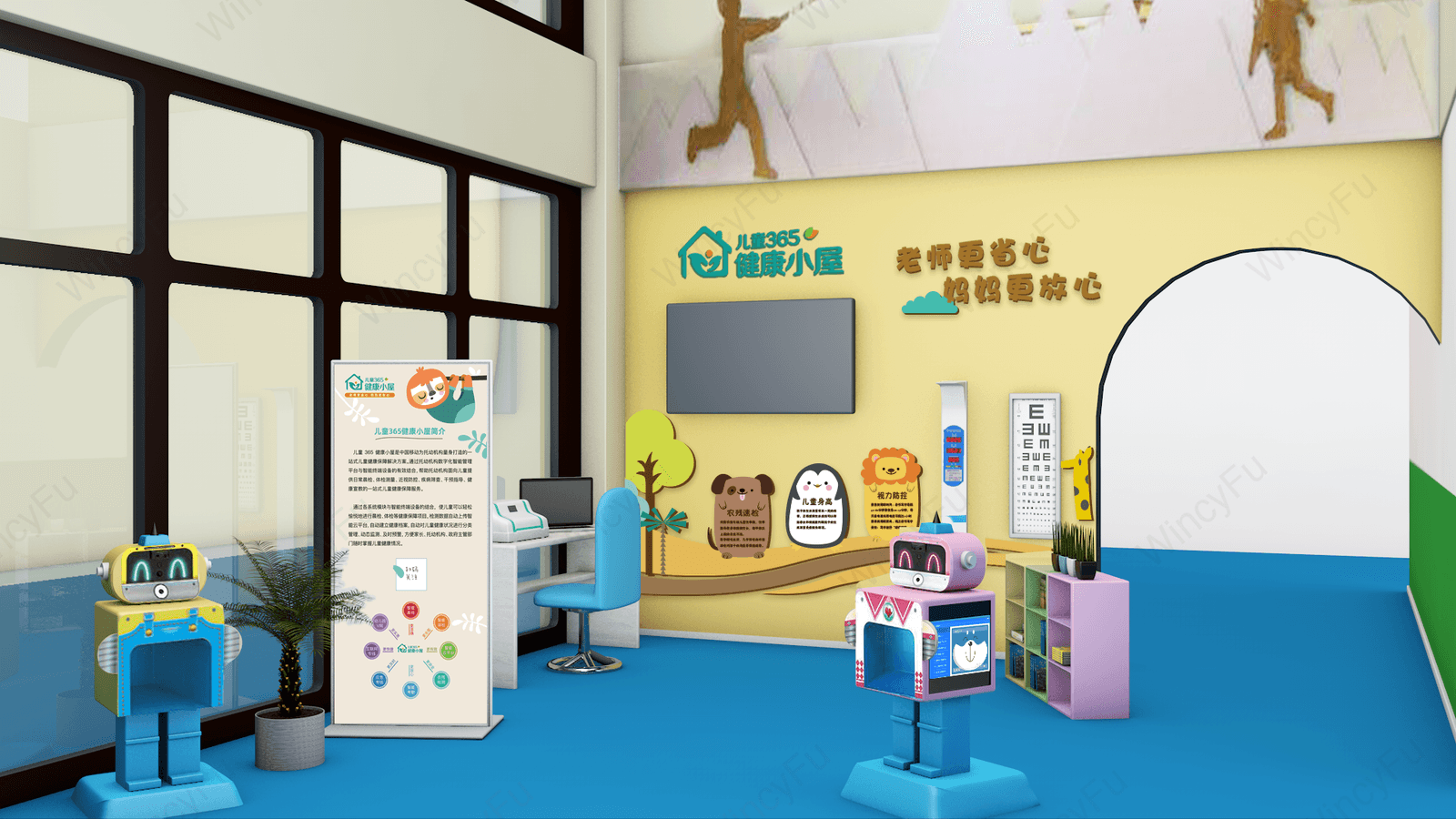
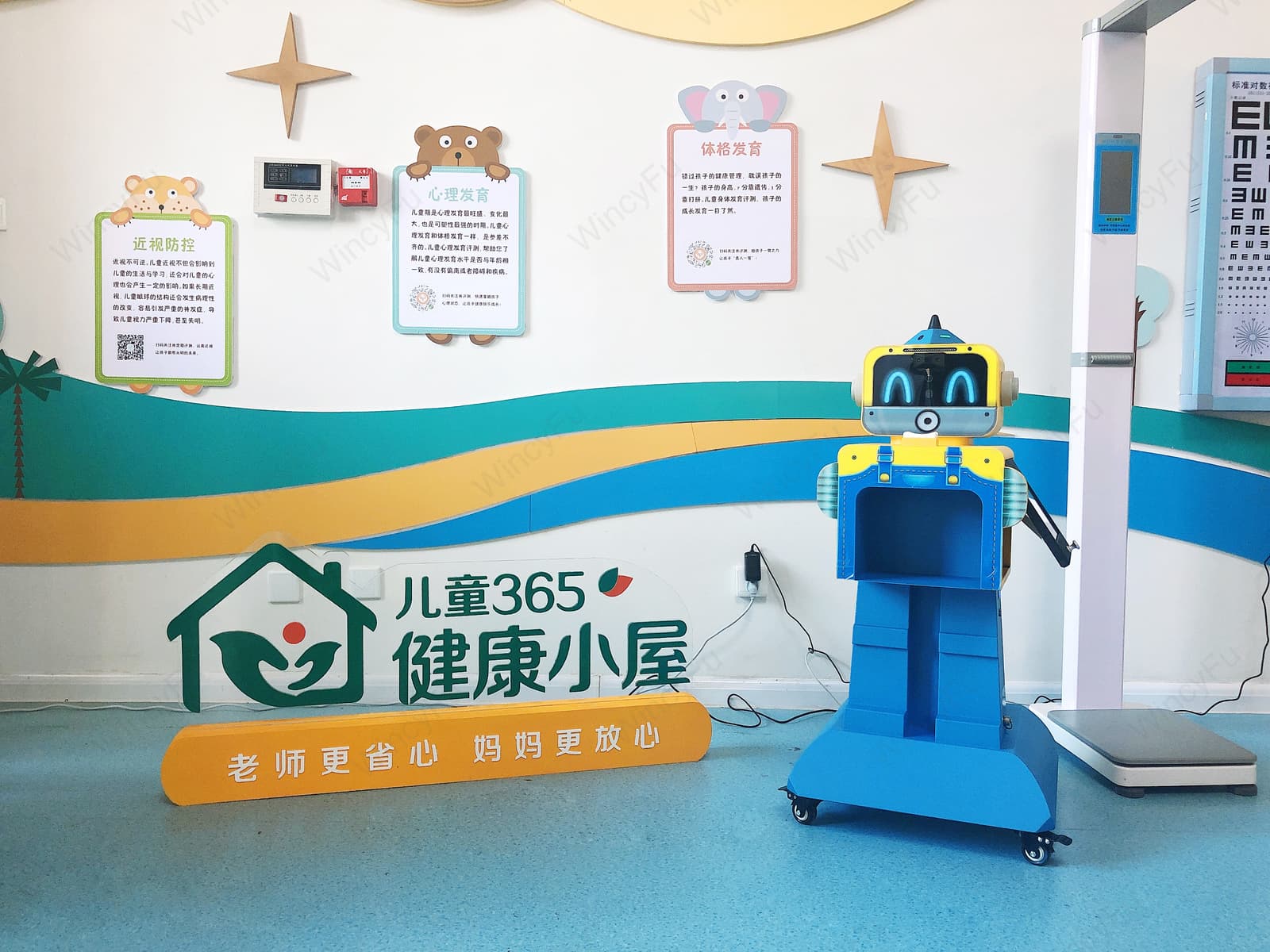
Child Health Hut: extending the product offline.
The Child 365 Health Hut belongs to the same child-health product ecosystem. My work covered mobile UI, spatial concept and rendering, wall displays, brand applications, brochure, and logo. One pilot site was built.
Design Highlights
Representative design work.
Institutional health digitisation
Turns 12 types of paper records, including morning checks, attendance, medication, and sanitation, into digital workflows for entry, review, retrieval, and long-term archiving.
Multi-role collaboration design
Defines different information scopes, task entry points, and workflows for families, teachers, health practitioners, principals, procurement staff, and doctors across mini-programs and PC.
Nutrition and procurement design
Connects ingredient and dish management, quantified meal planning, nutrition calculation and scoring, procurement estimates, and purchase-order generation in one PC workflow.
Online and offline extension
Completed the food-safety monitoring dashboard design and extended child-health services into one health-hut pilot through spatial renderings, wall displays, a brochure, and logo design.
Reflection
Reflection: begin with a role-task-permission matrix.
A multi-role system should define who initiates, processes, reviews, and does not participate before assigning tasks to platforms.
Clarify roles and boundaries first. A family leave request connects to teacher approval and attendance, while the medical side does not participate. These boundaries should be confirmed before interface design.
Then assign work to mobile and PC. Field records, reminders, and quick actions belong on mobile; long forms, batch management, meal planning, nutrition calculations, and reports belong on PC.